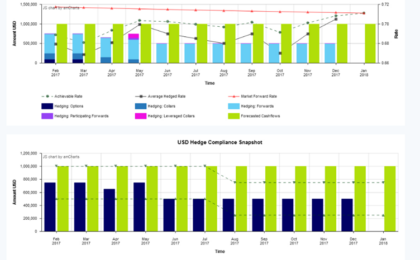










Hedgebook delivers faster, smarter treasury management results
It doesn’t matter if you’re a corporate, bank, broker, financial advisor, or auditor. If managing forex exposure, treasury management, interest rate (or commodity) hedging, or derivative valuations is part of what you do – you need Hedgebook.

Corporates
Make fact-based forex hedging decisions faster. Build confidence overnight using accurate, intuitive, cloud-based software.

Banks
Grow client confidence and FX hedging portfolio at the same time. Share real-time data and insights to deliver instant value.

Brokers
Create that x-factor clients are looking for. Real insights based on accurate data that generate more opportunities - faster.

Auditors
Approved, independent, financial instrument valuations for the audit process. Know you are being 100% accurate and compliant.

Advisors
Deliver better advice, faster with shared views of your client’s Treasury Management position and easy-to-understand reports.

Not sure?
Hedgebook is a valued tool for a wide range of roles and applications. If you aren't sure where you fit - there is no harm in asking.

10+
Countries

1400+
Companies

US$5.3B+
FX Forwards p/a

US$10B+
Valuations p/a
Critical capabilities Hedgebook delivers

Get off spreadsheets forever
“It is so much easier to manage hedging using Hedgebook than it ever was on a spreadsheet… And did I mention how easy it is to use and how user-friendly the interface is?”
Frontier International Rebecca Parsons
Get a shared view of the world
“In using Hedgebook we instantly surfaced what our clients needed to know about and which clients had the most pressing need for us to call. We are more engaged and clients are more willing to share information as a result – which lets us be even more proactive.”
FX Manager, Bank
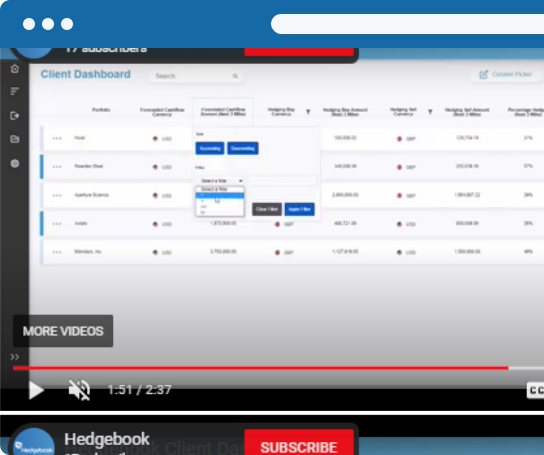


Understand all the risks
“Instead of a spreadsheet with a lot of numbers, Hedgebook’s easy to use graphs make it easy to explain our various currency exposures and how we’re managing them to a non-financial audience.”
Bluelab CFO Mike Marszewski
Accurate valuations in seconds
“Hedgebook Audit is simple, easy to use and a cost-effective way of valuing derivatives that can be a complex and costly area of the audit.”
Miriam Hanley, Menzies